We are processing your request.
Please, don’t close or refresh the page.
Natural History Museum of Los Angeles County in Exposition Park

Dinosaur Hall at the Natural History Museum LA

Two stories of real fossils, the baby, juvenile and adult T. rex skeletons, a 68-foot Mamenchisaurus and sea reptiles hanging over the floor. What is in the Dinosaur Hall, how it is laid out and how to plan your time.

The Jane G. Pisano Dinosaur Hall is the room most people come to the Natural History Museum of Los Angeles County to see. It fills two stories and 14,000 square feet with more than 300 fossils, including 20 complete dinosaur and sea creature mounts, and most of the skeletons are real fossils rather than casts. This guide walks through the hall piece by piece: the three T. rex skeletons that show one animal growing up, the 68-foot Mamenchisaurus, the marine reptiles overhead, and the hands-on stations and lab view that explain how scientists know what they know. It also covers what else your ticket opens in the museum and how to fit the hall into a visit. For transport, parking and the other galleries, see our Natural History Museum visitor guide.

Natural History Museum of Los Angeles County: Entry Ticket

Highlights

Explore the captivating Dinosaur Hall featuring more than 300 fossils and impressive skeletal displays.

Experience immersive wildlife environments in the African and North American Mammal Halls.

Admire the extensive Gem and Mineral Hall, showcasing 150,000 specimens including gold and diamonds.

Visit current special exhibitions such as ‘Unearthed: Raw Beauty’ running through the end of 2026.

Enjoy wheelchair accessibility throughout the museum and convenient parking options.

Dinosaur Hall: key facts

The hall opened in July 2011 and is about 14,000 square feet, twice the size of the museum's old dinosaur galleries.

It holds more than 300 fossils, including 20 complete dinosaur and sea creature mounts.

The T. rex growth series shows a baby of about 10 feet, a juvenile of about 20 feet and an adult of about 30 feet.

The 68-foot Mamenchisaurus is the largest specimen in the hall.

The marine reptiles Plotosaurus and Morenosaurus hang over the main floor.

Two-thirds of the full-body specimens had never been on display before the hall opened.

Children 2 and under enter free.

Inside the hall: two stories of fossils

Inside the Natural History Museum of Los Angeles County

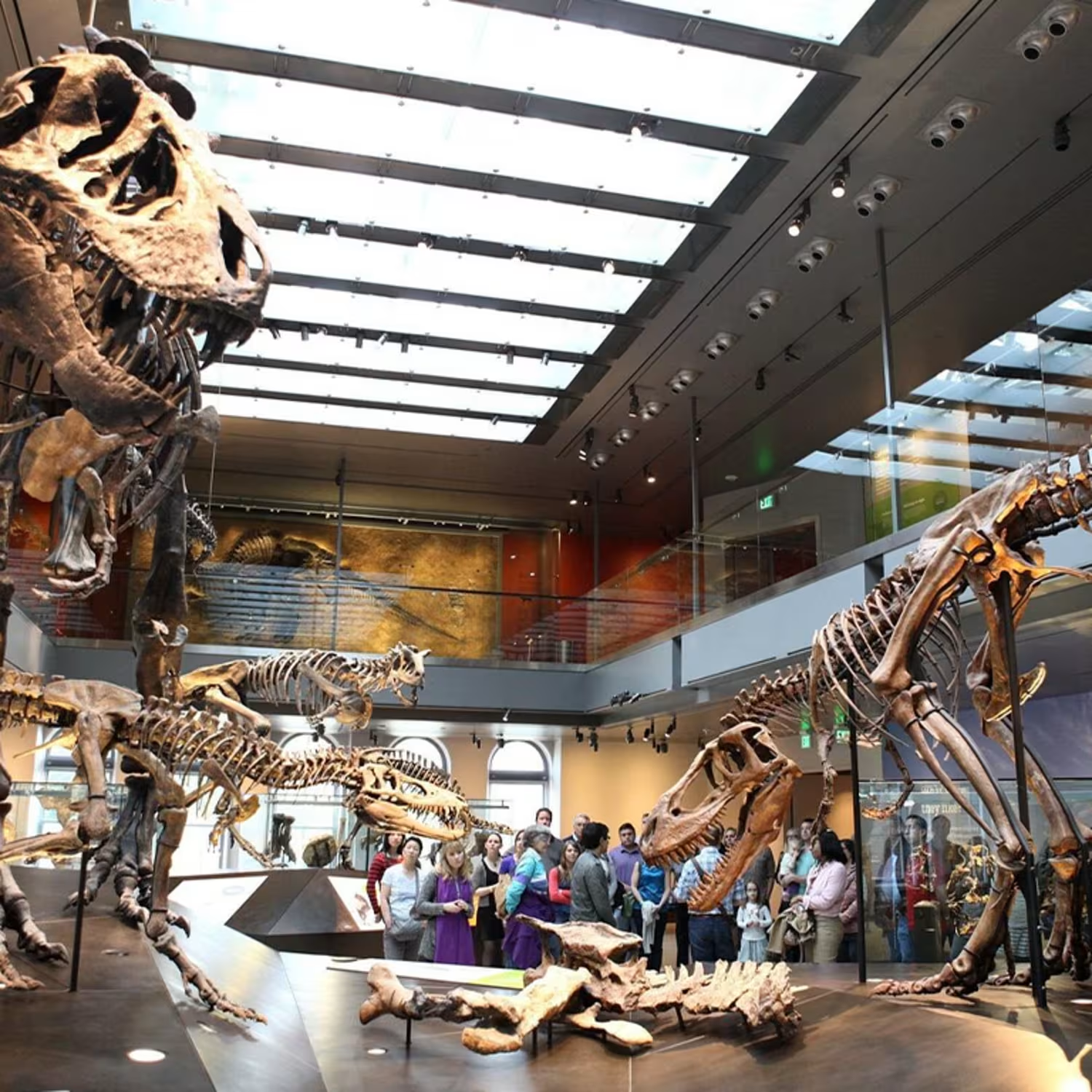
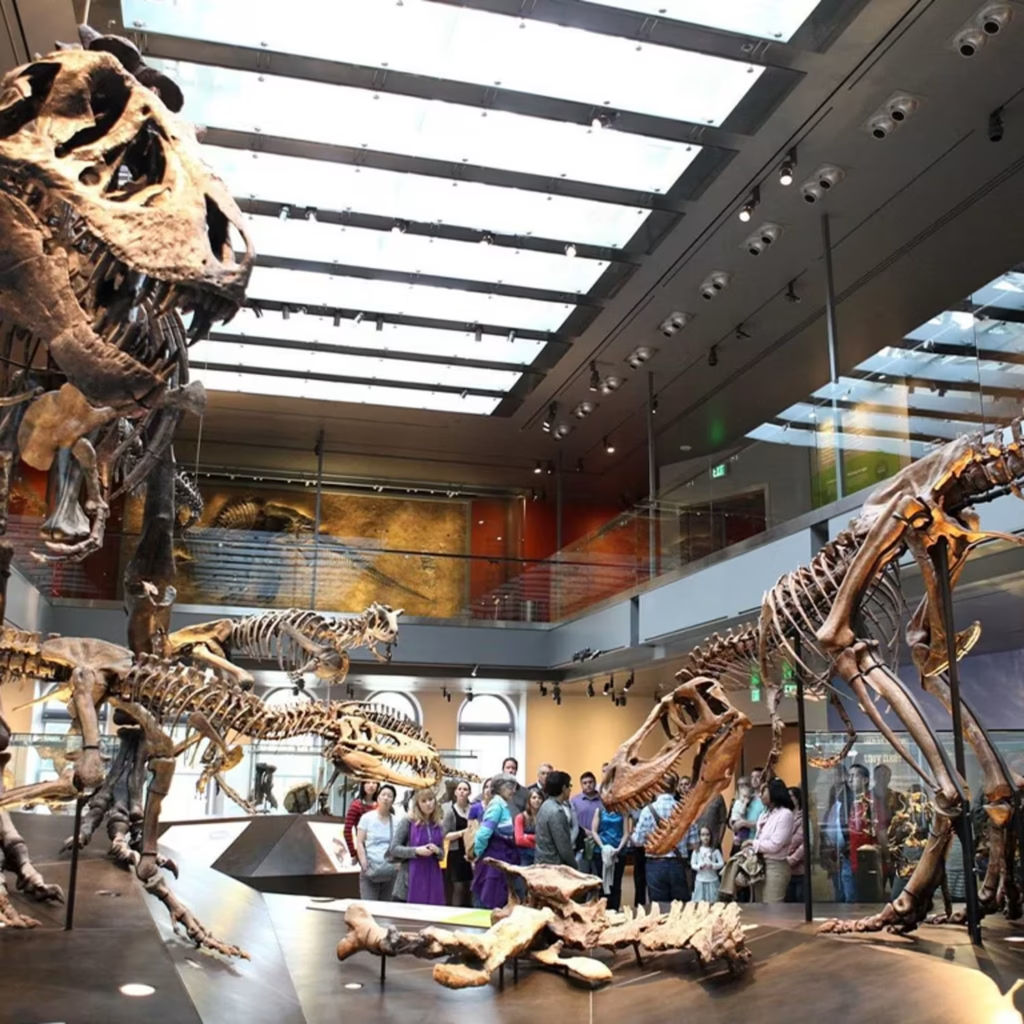
The Dinosaur Hall is built from two conjoining two-story galleries, and the layout is part of the show. Skeletons stand on black platforms in natural light, and walkways and balconies let you look at the same animal from below and then again from above, so a long neck or a row of teeth reads differently on each level.

The hall is organized as a set of case studies rather than a timeline from oldest to youngest. Each display asks what scientists actually know about an animal and what is still unknown, which is why the labels talk as much about evidence as about size. Most of the skeletons are real fossils, not casts, and the museum's curator Luis Chiappe, who directs the Dinosaur Institute, collected some of them himself in the Utah desert.

Two-thirds of the full-body specimens were being shown for the first time when the hall opened in July 2011. The museum counts more than 300 fossils in total, with 20 complete mounts of dinosaurs and sea creatures as the centerpieces.

The T. rex growth series

Fossil display at the Natural History Museum of Los Angeles County

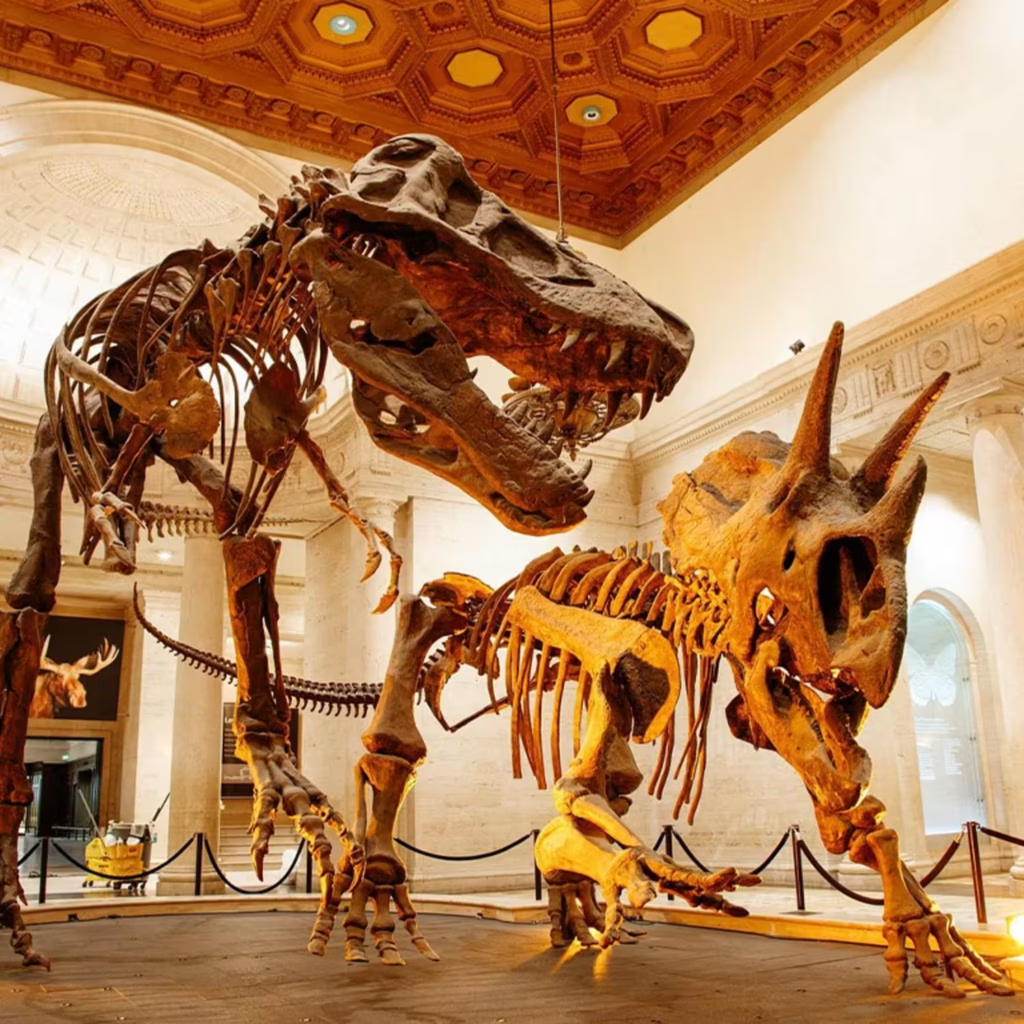
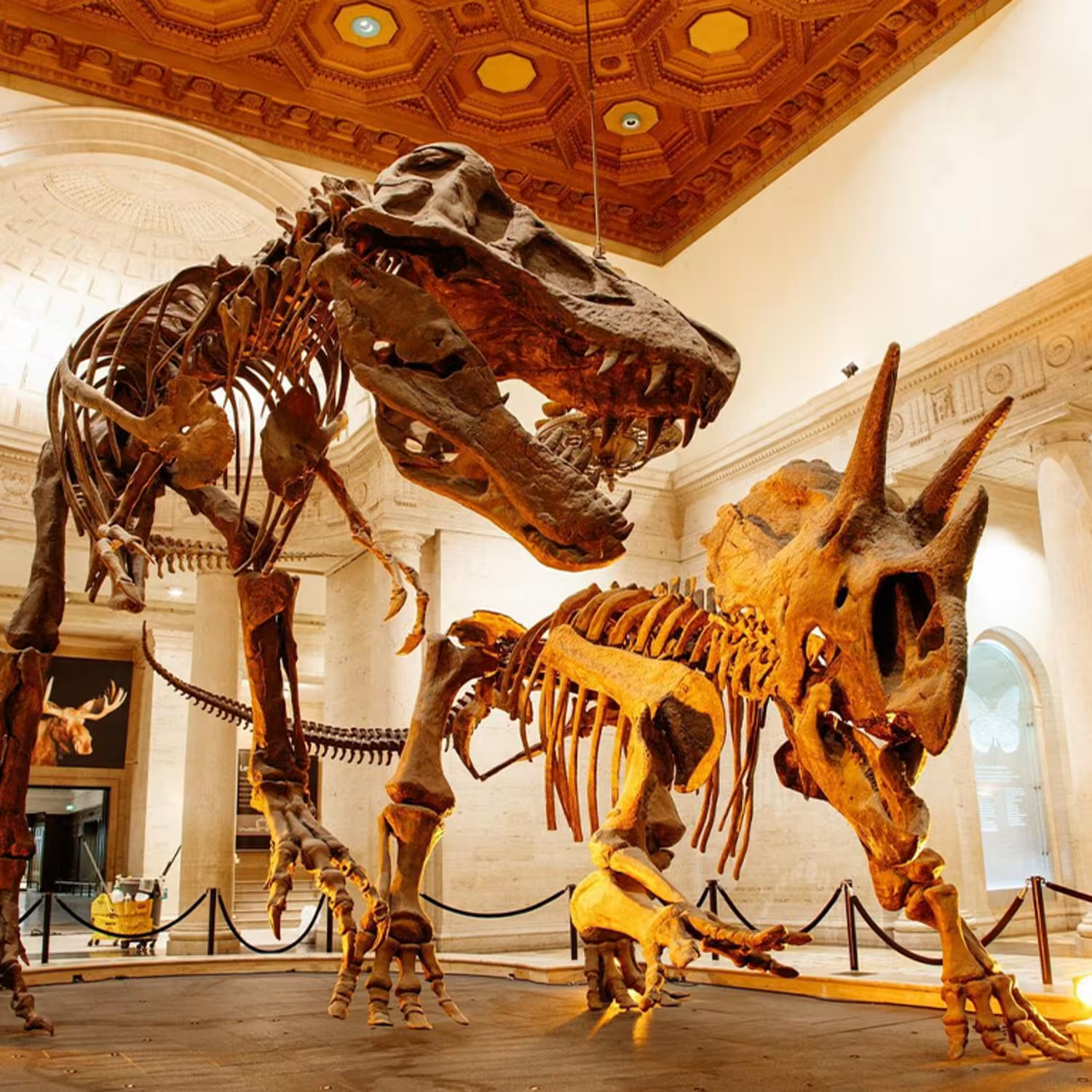
The headline attraction is three Tyrannosaurus rex skeletons of different ages standing together, a combination the museum presents as the only one of its kind. The baby is about 10 feet long and is estimated to have died at around 2 years old, which makes it the youngest known T. rex fossil. The juvenile is about 20 feet long and was 14 when it died. The adult, nicknamed Thomas, was 17 and measures about 30 feet.

Together they show how the animal changed as it grew, and the curator uses the display to talk about both growth and behavior. The three skeletons surround the carcass of a duck-billed dinosaur, the kind of prey a T. rex would have eaten, so you see the whole story in one frame: how big each stage was and what it was hunting.

A separate display pairs a T. rex with a Triceratops in a Dueling Dinos scene. The Triceratops in the hall had never been on display before it opened, so it is worth walking the whole circuit rather than stopping at the first crowd.

Mamenchisaurus and the sea reptiles

Skeleton display at the Natural History Museum of Los Angeles County

The largest specimen in the hall is a Mamenchisaurus, a long-necked sauropod that measures 68 feet. It anchors the scale of the room: next to it, even the adult T. rex looks compact.

Look up as well as across. Two marine reptiles, the mosasaur Plotosaurus and the plesiosaur Morenosaurus, are cantilevered over the main floor, so they appear to swim above the visitors. They are a reminder that not every large reptile of the dinosaur era was a dinosaur, one of the misconceptions the hall sets out to correct.

The hall makes two more points that surprise many visitors. Dinosaurs did not all go extinct at the same time, and birds are living dinosaurs, so the story does not end with the last skeleton in the room.

Hands-on stations and the lab view

Visitors at the Natural History Museum of Los Angeles County

You are greeted at the entrance by a simulated dinosaur roar, and the hall then mixes big skeletons with things to do. There are digital displays and large-format video, touchable fossils and casts, and hands-on games that let children act as paleontologists. A multimedia kiosk lets you excavate specimens on screen.

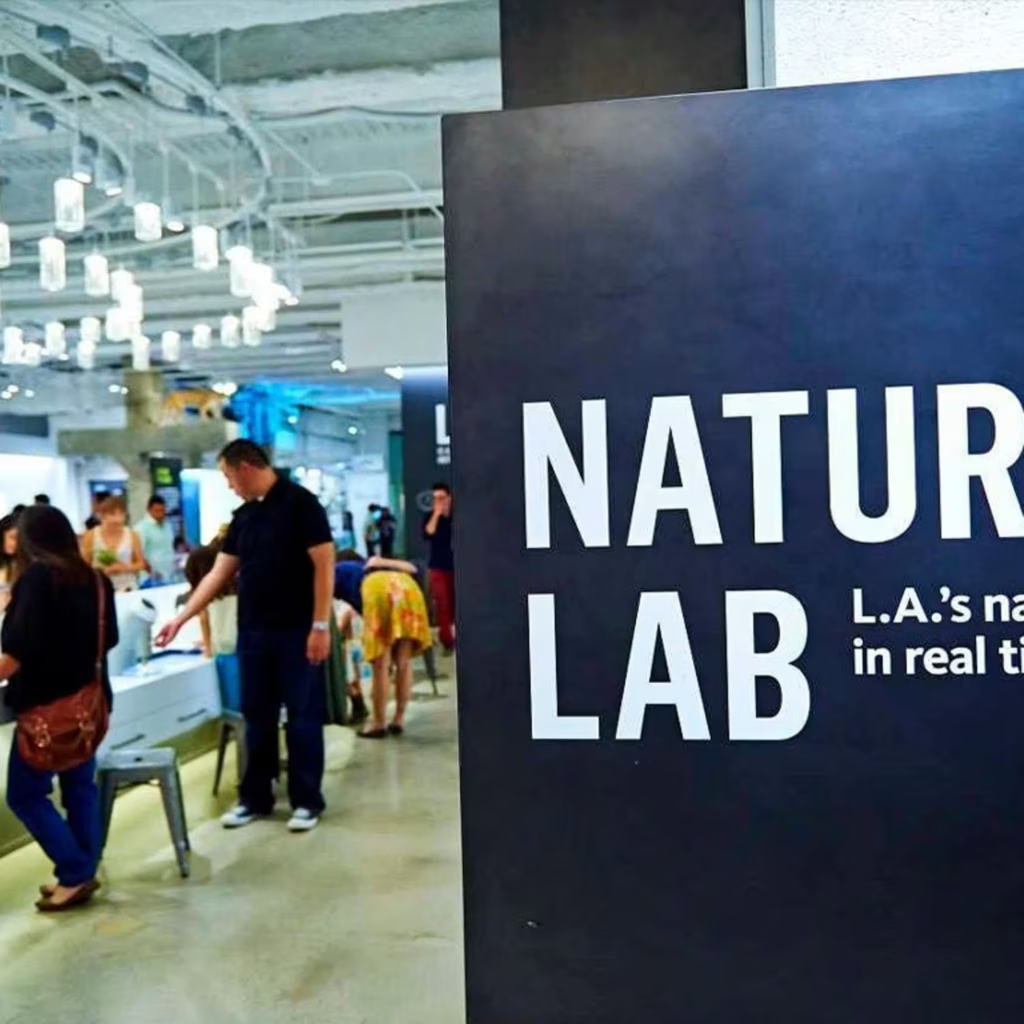
The hall also gives you a view of the working paleontology lab, so you can see how fossils are prepared and studied rather than only the finished mounts. Allow time at these stations: they are where families tend to stay longest, and they explain the evidence behind the skeletons you have just walked past.

Beyond the Dinosaur Hall

Natural History Museum of Los Angeles County building

Our ticket is general admission, so it opens the permanent halls beyond the dinosaurs. The Age of Mammals shows fossil skeletons beside taxidermy animals in habitat dioramas, with local prehistoric specimens from Southern California such as the Simi Valley mastodon and a saber-toothed cat, plus a hands-on activity where you assemble an animal skeleton.

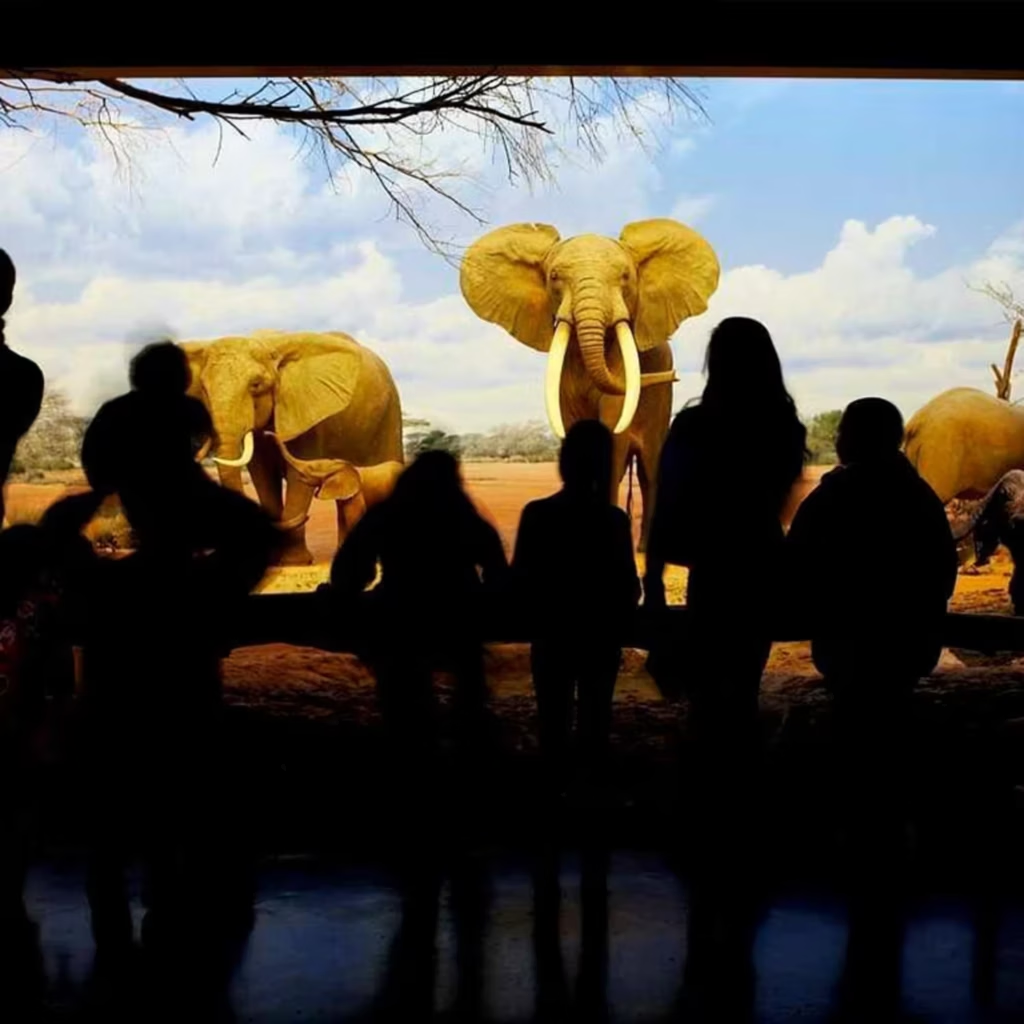
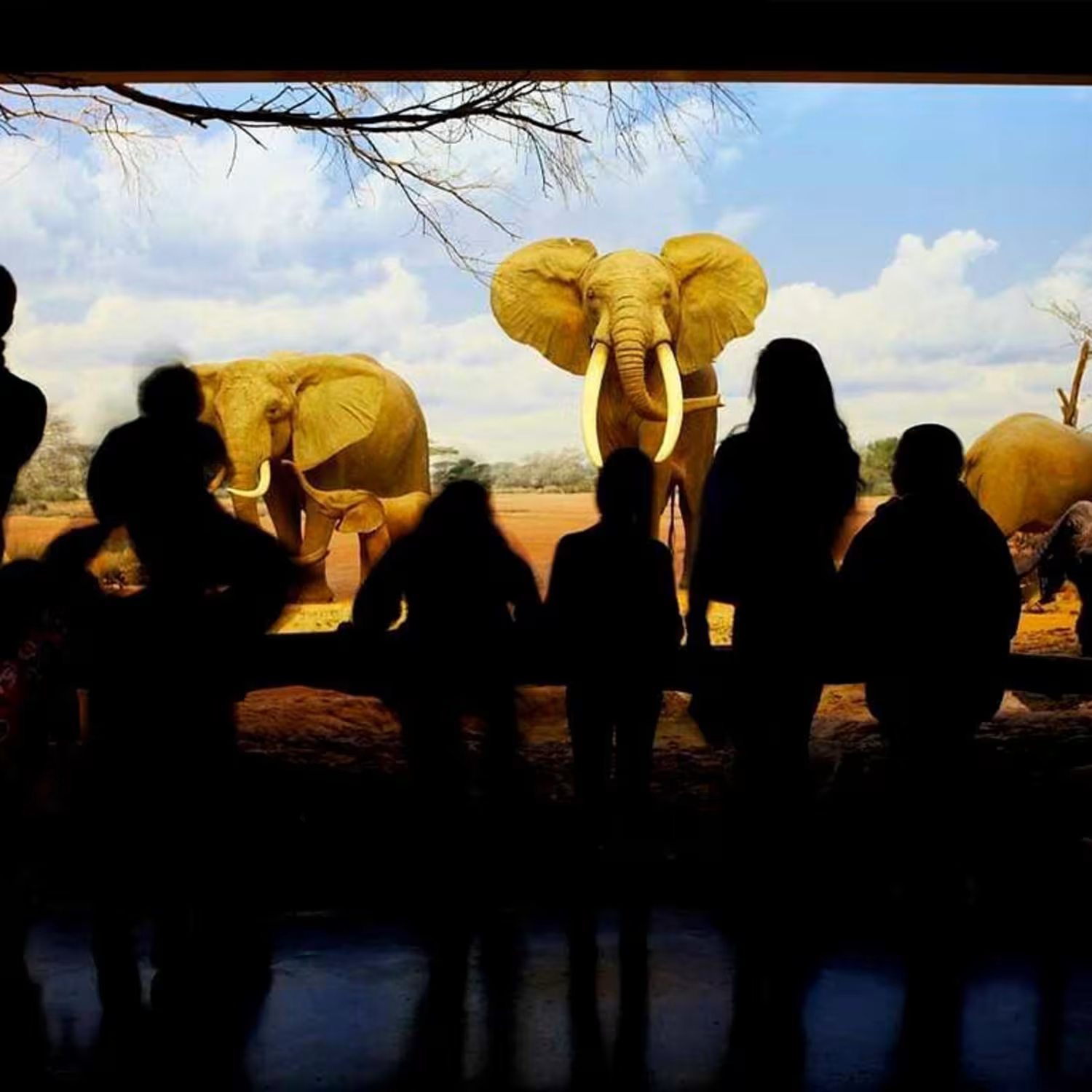
The African Mammal Hall and the North American Mammal Hall recreate natural environments with animals including the savanna elephant, okapi and hippopotamus. The Gem and Mineral Hall and the Becoming Los Angeles gallery, which covers about 500 years of local history in six sections, add a very different pace after the fossils. Outside, the Nature Gardens include a Pollinator Garden and an edible garden.

The museum opened in 1913 and holds more than 35 million specimens, so you will not see everything in one visit. Special exhibitions and the seasonal Butterfly and Spider Pavilions need a separate ticket in addition to general admission.

A route through the Dinosaur Hall

Start at the entrance of the hall for the roar and the first skeletons, then take the walkway up to see the mounts from above.

Spend your longest stop at the T. rex growth series: read the labels for the baby, the juvenile and Thomas.

Walk the length of the Mamenchisaurus to judge its 68 feet, then look up for Plotosaurus and Morenosaurus.

Finish at the touchable fossils, the excavation kiosk and the lab view.

Continue to The Age of Mammals and the mammal halls before you leave.

Visiting with children and access

Children 2 and under enter free. Check the age bands / ticket options shown when you book, as they tell you who needs a ticket.

The hall suits young children: touchable fossils, a roar at the entrance and games where they play paleontologist.

The museum is wheelchair accessible throughout.

Show your ticket at either entrance, the NHM Commons Plaza Entrance or the North Entrance.

Free Wi-Fi is available throughout the museum.

Quick tips before you go

Go to the Dinosaur Hall first, before the crowds gather around the T. rex skeletons.

Take the Expo Line to Expo/USC or Expo/Vermont, both near the museum.

Expect heavier traffic around the Coliseum on USC football game days.

Read the case-study labels: they explain how scientists know what they know.

Look up for the marine reptiles hanging over the main floor.

Combine the Dinosaur Hall with more of Los Angeles

Exposition Park pairs well with Museum Row. Hancock Park and the La Brea Tar Pits are a short drive away for the Ice Age story, and the Academy Museum of Motion Pictures is on the same side of town. Compare more museums in Los Angeles, or head up to Griffith Observatory for the planetarium. When you are ready, choose your entry on the Natural History Museum ticket page.

Dinosaur Hall: FAQs

What is the Dinosaur Hall at the Natural History Museum of Los Angeles County?

It is a two-story, 14,000-square-foot hall with more than 300 fossils and 20 complete dinosaur and sea creature mounts. It opened in July 2011 and is named the Jane G. Pisano Dinosaur Hall.

How many fossils are in the Dinosaur Hall?

More than 300 fossils, including 20 complete dinosaur and sea creature mounts. Two-thirds of the full-body specimens had never been displayed before the hall opened.

What is special about the T. rex skeletons?

The hall shows three T. rex skeletons of different ages together: a baby of about 10 feet that died at around 2 years old, a juvenile of about 20 feet and an adult of about 30 feet nicknamed Thomas. They show how the animal grew.

What is the biggest dinosaur in the hall?

The Mamenchisaurus, a long-necked sauropod that measures 68 feet, is the largest specimen in the hall.

Are the dinosaur skeletons real or casts?

Most of the skeletons are real fossils rather than casts. The hall also has touchable fossils and casts you can handle.

Is the Dinosaur Hall included with the ticket?

Yes. Our general admission ticket covers the permanent halls, including the Dinosaur Hall and the Mammal Halls. Special exhibitions and the seasonal pavilions need a separate ticket.

Is the Dinosaur Hall good for children?

Yes. It has a simulated roar at the entrance, touchable fossils and hands-on games where children act as paleontologists. Children 2 and under enter free; check the age bands and ticket options shown when you book.

Can you see paleontologists at work?

The hall includes a view of the working paleontology lab, so you can see how fossils are prepared and studied.

Are there marine reptiles in the Dinosaur Hall?

Yes. The mosasaur Plotosaurus and the plesiosaur Morenosaurus are cantilevered over the main floor.

Which entrance should I use?

Show your ticket at either the NHM Commons Plaza Entrance, which faces Exposition Park, or the North Entrance.

What else is there to see besides dinosaurs?

The Age of Mammals, the African and North American Mammal Halls, the Gem and Mineral Hall, Becoming Los Angeles and the Nature Gardens are all part of the museum.

About this guide

Sources: Natural History Museum of Los Angeles County, Plan Your Visit; EurekAlert, Natural History Museum of Los Angeles County Opens New Dinosaur Hall; NPR, Dinosaur Hall Roars To Life In Los Angeles; CBS News Los Angeles, Best Exhibits To See At The Natural History Museum; Secret Los Angeles, Dinosaur Hall.